



A moist vanilla sponge looks like the easiest cake in the book, which is exactly why it trips people up. The ingredient list is short, the batter is pale and plain, and there is nowhere to hide. What separates a tender, springy slice from a dry, rubbery one comes down to a few small habits: how long you beat the butter, how gently you fold the flour, and whether you can resist opening the oven door at minute fifteen. None of it is hard. It just has to happen in the right order.
Before You Start: Temperature, Tools and Timing
Most sponge problems begin before the first ingredient hits the bowl. Take the butter and eggs out of the fridge 45 minutes to an hour ahead. Butter should be soft enough that your finger leaves a dent, but not so warm that it greases the paper; melted butter cannot hold air, and cold butter shreds instead of creaming.
If you weigh your flour, do it. A digital scale removes the biggest variable in home baking. If you use cups, stir the flour first, spoon it into the cup, and level it with a knife. Scooping straight from the bag can pack in nearly double what the recipe intends, and that alone is enough to turn a soft sponge into cardboard.
Set the oven to 175°C (350°F) at least 15 minutes ahead, with a rack in the middle. An oven thermometer will tell you more about your cake than any recipe note.
Creaming Butter and Sugar: The Step Worth Slowing Down For
Creaming is not stirring. It is the work of forcing tiny air bubbles into the butter, and the sugar crystals are the tools that do it. Scrape the butter, sugar and any salt or zest into a large bowl and beat on medium speed for a full three to five minutes. By hand, expect closer to eight.
What it should look like
The color shifts from yellow to pale ivory, the texture turns creamy and light, and if you rub a little between your fingers the sugar no longer feels gritty. Stop the mixer once or twice and scrape the sides and the bottom of the bowl, where uncreamed butter likes to hide.
If the mixture looks curdled or slick, the butter was too soft. Chill the bowl for ten minutes and beat again.
Adding the Eggs Without Curdling
Beat the eggs in a jug with the vanilla, then pour them in a little at a time, roughly a tablespoon per addition, mixing for 20 to 30 seconds between each. Going slowly is what keeps the emulsion smooth. Dumping them all in at once is the fastest route to a grainy, separated batter.
If it does curdle, don't panic. Beat in a spoonful of the flour called for in the recipe and it will usually pull back together. The finished cake will be fine.
Folding the Flour: Keeping the Air You Just Made
Sift the flour, baking powder and salt together, twice if you have the patience, and add them in three additions. If the recipe includes milk or buttermilk, alternate it with the flour, starting and ending with flour. Then put the mixer down and pick up a large flexible spatula.
- Cut straight down through the middle of the batter, right to the bottom of the bowl.
- Sweep the spatula along the base and up the near side, bringing the batter up and over the top.
- Give the bowl a quarter turn and repeat. Fifteen to twenty folds is usually enough.
- Stop while a few faint streaks of flour remain. They will disappear as you pour.
The batter should slide off the spatula in a thick, slow ribbon. Thump it, beat it, or keep going "just to be sure" and you are knocking out the air you spent five minutes putting in.
Into the Pan, Then Into the Oven
Grease the tin and line the base with parchment, spoon the batter in, and smooth the top with the back of the spatula. Lift the pan an inch above the counter and let it drop once or twice to settle any large pockets. Twice, not ten times.
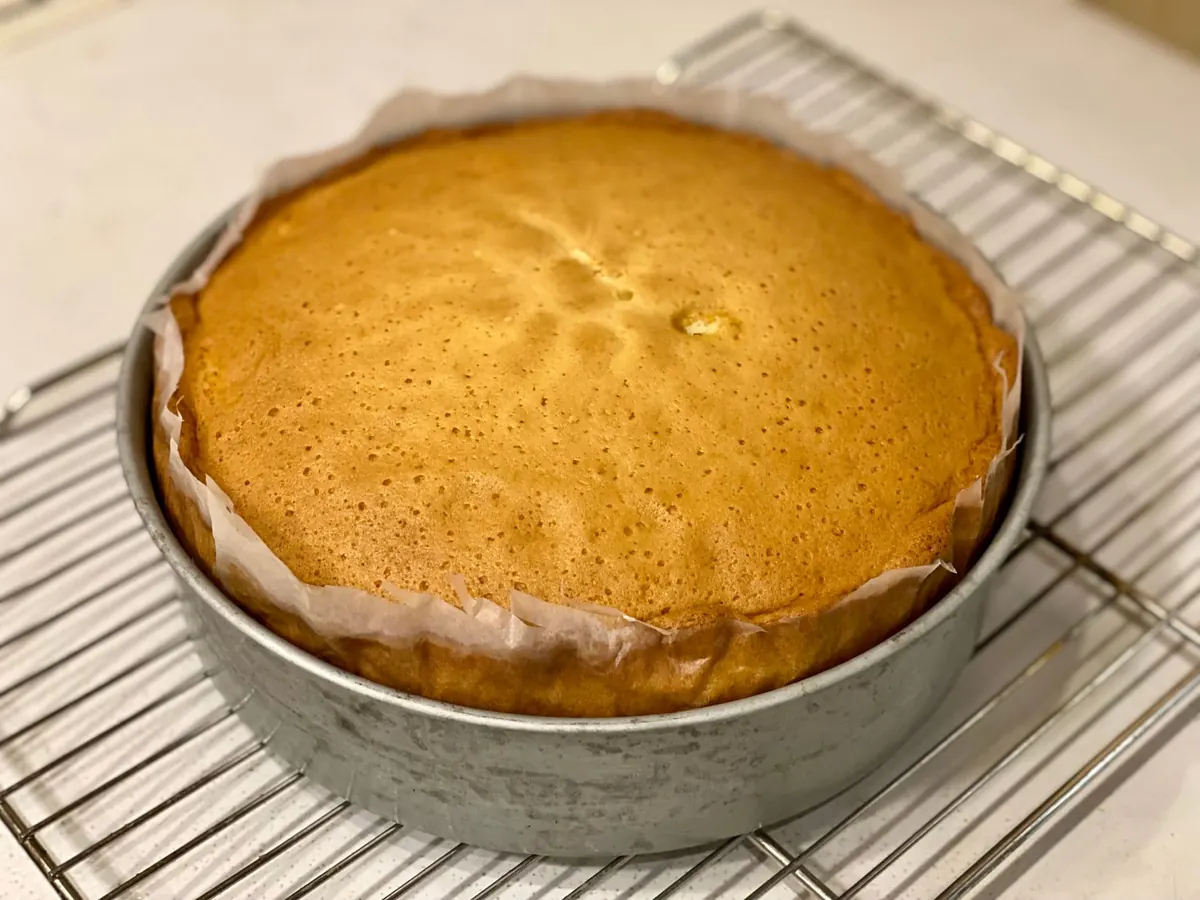
Bake in the middle of the oven and leave the door closed for at least two-thirds of the stated time. Escaping heat is the classic cause of a sunken middle. Start checking at the earliest time the recipe gives: a skewer in the center should come out with a few moist crumbs, and the top should spring back when pressed lightly. If the cake is browning unevenly, rotate the pan then, quickly.
When a Sponge Sinks: The Usual Suspects
- Overmixing after the flour went in. The gluten tightens and the trapped air escapes.
- Opening the oven early. The structure is still setting, and cool air collapses it.
- Underbaking. A soft center cannot support the top.
- Butter that was too warm or too cold. It either will not hold air or will not cream.
- Too much liquid or leavening. More is not better. Follow the recipe the first time.
A gentle dome and a few fine cracks are normal, and nothing to fix.
Cooling, Filling and Storing
Leave the cake in the tin for ten minutes, then turn it out onto a wire rack and peel off the parchment. Cool it completely before frosting, or the buttercream will slide. For an even softer crumb, wrap the cooled layers tightly in plastic and leave them overnight; the moisture redistributes and the cake genuinely tastes better the next day. Fill with whipped cream, vanilla buttercream and fresh fruit, and store airtight at room temperature for two to three days.
The Beginner's Checklist
Read the recipe twice. Weigh your flour. Soften the butter properly. Cream it for the full time, scrape the bowl, add the eggs slowly, and fold the flour by hand for less time than feels comfortable. Bake it through, keep the door shut, and let it cool before you decorate. Do those things and you will get a moist vanilla sponge every time, and the second one will be easier than the first.