



Two trays slide into the same oven, bake for the same twelve minutes, and come out as different cookies: one bendy and soft, the other thin enough to snap. That gap isn't luck or a moody oven. It's the balance of sugar, butter, flour, eggs, and how you handle them. Learn which lever does what, and you can take a single recipe and push it toward the cookie you actually want.
Sugar Decides How Much Moisture Stays
White granulated sugar melts in the oven into a liquid that lets the dough spread, then cools into a glassy, brittle structure. Push the white sugar up relative to the flour and you get thin cookies with crisp edges and crackly tops.
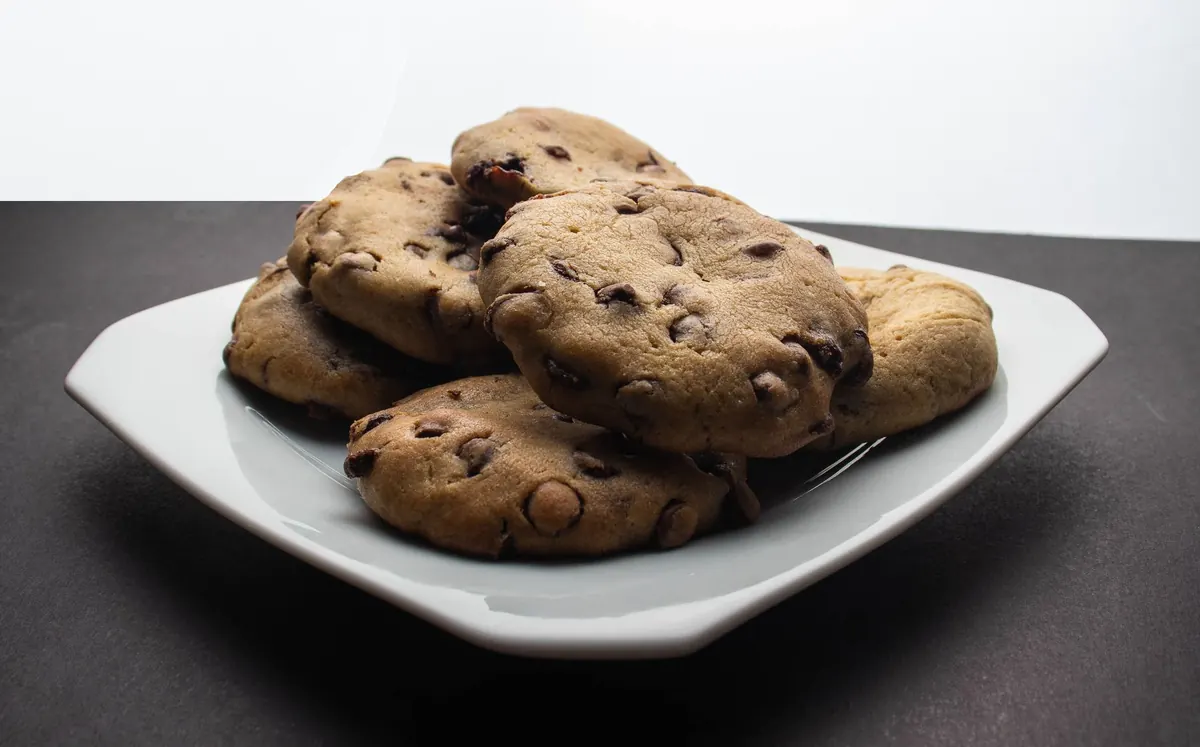
Brown sugar is granulated sugar that still holds its molasses — roughly 3 to 7 percent by weight, depending on whether you buy light or dark. Molasses is hygroscopic, meaning it pulls moisture from the air and keeps it, so brown sugar cookies stay soft for days instead of hours. That's why chocolate chip recipes leaning on brown sugar bake up chewy while sugar cookies made with all white sugar crisp as they cool.
A useful rule: brown sugar for chew, white sugar for snap, total sugar for spread. Cut the sugar by a few tablespoons and the dough stiffens and bakes thicker.
Butter: Form and Temperature Matter More Than Brand
Melted butter behaves almost like oil. It can't hold air, so it adds no lift, and because it's already liquid the dough relaxes and spreads early in the bake. The result is a flat cookie with caramelized edges and, if you pull it while the center still looks underdone, a chewy middle.
Softened butter creamed with sugar works differently. Those few minutes of beating whip air into the mixture, and that air expands in the oven, lifting the dough into something taller, softer, slightly cakier. Room-temperature butter — around 65°F to 68°F (18°C to 20°C) — creams best. Butter that's greasy or half-melted won't hold air no matter how long you beat it.
Butter also carries about 15 to 18 percent water, which turns to steam and helps the cookie rise. Shortening has none and melts at a higher temperature, so cookies made with it hold their shape and stay soft, at the cost of flavor. Butter tastes like butter because its milk solids brown.
If you brown butter for that nutty note, remember you've cooked off water. Chill it back to a solid before creaming, or the dough will spread further than the recipe intends.
Flour Sets the Ceiling on Chew
Protein percentage is a decent proxy for how much gluten a flour can form, and gluten is what gives a cookie its chew.
- Cake flour: about 7 to 9 percent protein
- All-purpose flour: about 10 to 12 percent
- Bread flour: about 12 to 14 percent
Swap all-purpose for bread flour in a chocolate chip cookie and the batch comes out noticeably taller and chewier. Swap in cake flour and it turns tender and delicate, almost sandy. Quantity matters just as much: more flour against the same fat and sugar gives a thicker, drier, more crumbly cookie; less flour gives more spread, a greasier feel, and a crisper bite. A spoonful of cornstarch shortens gluten strands and tenderizes without changing flavor.
Mixing, Eggs, and Resting
Creaming butter and sugar for three to five minutes builds lift. Go much past that and the structure can over-inflate and collapse in the oven, leaving flat, crisp cookies — occasionally a happy accident, usually not.
Once the flour goes in, stop mixing as soon as the streaks disappear. Extra stirring develops gluten, and gluten developed at this stage makes cookies tough rather than pleasantly chewy.
Eggs pull in two directions. Yolks bring fat and moisture for a fudgy chew; whites bring protein and water for structure and crispness. An extra yolk makes a richer, softer cookie. An extra white makes it drier and more brittle.
Resting dough in the fridge for a day or two lets the flour hydrate and lets enzymes break some starch into sugar. The cookies brown deeper, taste more complex, and spread less because the butter is cold when they hit the oven.
Oven Temperature and Bake Time
Temperature decides how fast the edges set.
- 400°F (205°C): edges firm up before the middle can spread, giving a thick cookie with a soft center
- 350°F (175°C): the middle ground most recipes are written around
- 300°F to 325°F (150°C to 165°C): slow, even spread, thinner cookies, deeper caramelization
Baking time interacts with cooling. Cookies keep setting on the hot sheet, so pulling them a minute early keeps them chewy. Leave them on the pan for five minutes and they stay soft. Slide them onto a rack right away, the steam escapes, and they crisp.
Dialing a Recipe Toward the Cookie You Want
For chewy, thick cookies
- Shift the sugar toward brown, or use all brown
- Cream softened butter and sugar for a full three to four minutes
- Add an extra egg yolk
- Use bread flour, or a mix of bread and all-purpose
- Chill the dough at least two hours, ideally overnight
- Bake at 375°F to 400°F, pull when the centers still look underbaked, and cool on the pan
For thin, crisp cookies
- Shift the sugar toward white granulated
- Melt the butter instead of creaming it
- Trim the flour slightly, keeping all-purpose
- Add an extra egg white
- Scoop and bake right away, with no chilling
- Bake at 325°F a few minutes longer, and move them to a rack as soon as they come out
Change One Thing at a Time
Tweak everything at once and you learn nothing. Pick one variable — sugar type, butter form, chill time — change it, and bake a single test cookie alongside the batch. Note the dough temperature, the scoop size, and exactly when you pulled them. Weighing ingredients rather than scooping cups gets you repeatable results, since a packed cup of flour can weigh half again as much as a fluffed one.
After three or four rounds you'll know your oven and your own preferences well enough to look at any recipe and predict how it will bake. That's the real skill. And if a batch still goes sideways, eat it warm with a glass of milk and call it research.
Photo: Maurício Mascaro / Pexels